Wednesday, April 29, 2026
Home Blog Page 2

The Butterfly Effect

0

Small steps of ours in the right direction
may alter the course of
Our entire Life

Everything that happens in the world is for a reason.

Do You Know?

A Butterfly flapping its wings may cause a Typhoon.

Inside our Mind, there is a
Time Machine

Without altering the Past or Knowing about Future.

We Can Change the
Outcome of our Life
In this World and Most Importantly Hereafter.

If we are
Determined & Believe

In ourselves

Read, Learn & Raise the Questions.

Clear the Doubts

Do not just let them lay idle inside your Mind.

Stop being a Sheep

Do not follow Everyone or Anything Blindly

Read, Understand, Reach out for the Light , Raise Questions , Dig out the Answers

Start with Little Steps!

Flap your Wings

Create The Typhoon.

HOPE

1

For Human race,

Hope is one of the most powerful Gift from God .

What is the Difference between a Hopefull and a Hopeless?

How can we achieve a Positive attitude towards Life
Only when there is a Good Hope and a mind to strive.

How a bird inside a cage hoping one day will fly away
It is the hope which keeps her alive so she can be free someday

Hope has the power to achieve impossible
It gives us motivation, to make it possible

What is a Hope? how and where it comes from?

It Comes From Belief

And What is belief? How and Where it comes from?

It Comes From—-FAITH

A Firm Belief makes Our Faith stronger

Oh My dear friends, Give some time and think,
one day we all have to die and face the almighty

Buckle up, educate yourself ,do some calculations
For Some time Switch off the Netflix Or Prime

Build your Faith, Make it Strong

Do Research, Question and Clear the Doubts.

Don’t be a Prisoner of your own Prison
Set Yourself Free
True and Strong belief won’t make you an extremist
It will enlighten you, it will strengthen your faith.
And God Will surely answer what you HOPE for.

Build your Faith.

Strengthen your Belief

Then HOPE

Miracle Will Surely Happen!!

A Human Story

0

Let’s Do Something Positive.

Something which erases the tension that prevails.

The fruit of Action makes the pain curtails.

Open your Mind and Read through the Lines.

Its about US not just about Mine.

Let the Story Begin.

A Story about a Human who sees the light
But unable to benefit from it because of his plight.
He could see the light piercing through the darkness.
But unable to pull him out of the world’s ugly mess.

Entangled within this materialistic Life.
Meaning of his birth lost somewhere in the world’s hive.
He tries way too hard to jump out of it
but it backfires and he gets hit

Time has come to Rise again.
Open your heart, Make up your mind ,
Let’s help each other and break the chain

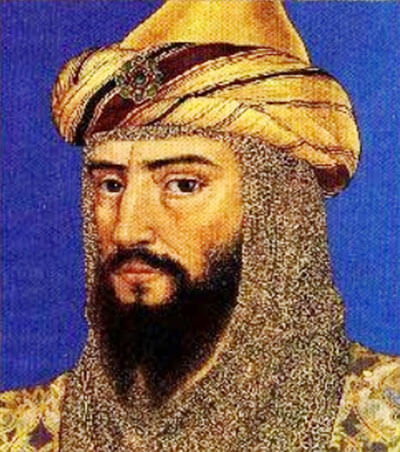
Sultan Salauddin Ayyubi (R.A)

0

This is how Salahuddin retook Jerusalem and shook the world.

Salahuddin Yusuf Ibn Ayyub is no doubt one of history’s greatest heroes. Both Muslims and non-Muslims alike praise his amazing accomplishments, as well as his shining qualities of bravery, generosity, and justice. From among his astonishing conquests, the capturing of Jerusalem from the crusaders is one that changed the history of the world.

Salahuddin’s early life – the makings of a leader

Born in Tikrit, Iraq in 1137 AD, Salahuddin (or Salah Ad-Din) spent his childhood memorising the Quran, learning the Islamic sciences, as well as poetry. His father Ayyub was the governor of Baalbek. In his youth, Salahuddin learned his military tactics from his uncle, Asad Al-Din Shirkuh and was mentored by Sultan Nur Ad-Din, who inspired Salahuddin to unite the Muslim Ummah. Salahuddin went on to capture Egypt from the Fatimids, and Syria from the Zengids, uniting the Muslim lands together and became known as the Sultan of Egypt and Syria.

The Crusaders capture Jerusalem

The horror and bloodshed of the events known as the Crusades are today almost unimaginable. Occurring in the Middle-East between 1095 and 1291, these 9 church-sanctioned campaigns sought to “retake” the Holy Land from its Muslim occupants. After the siege of Jerusalem in 1099, the invading army took control of the city and indiscriminately slaughtered the Jews and Muslims they came across. Whilst it is impossible to know the exact figures, somewhere between 3,000 and 70,000 (most likely around 10,000) was butchered at the hands of the crusaders.

“The slaughter was so great that [Crusader] men waded in blood up to their ankles…” Gesta Francorum

Salahuddin defeats the crusaders

88 years later, however, Salahuddin had decimated the occupying armies, defeating the Crusaders at the decisive battle of Hattin in July 1187, when they attacked Muslim pilgrims. This eventually leads to the capturing of Jerusalem by Salahuddin a few months later in October 1187. To avoid the captivity they expected, the leader of the city Balian D’Ibelin threatened to slaughter his own people and destroy the city.

“We will kill our own women and children and burn all that we possess. We will not leave you a single dinar of booty, not a single dirham, not a single man or woman to lead into captivity. Then we shall destroy the sacred rock, al-Aqsa mosque, and many other sites; we will kill the five thousand Muslim prisoners we now hold.”

However, Salahuddin instead promised their security gave them 40 days to pay a small ransom to free themselves. The Crusaders accepted and surrendered the city unilaterally.

Salahuddin enters Jerusalem

During his victory of Jerusalem, he entered the city, not as a boastful conqueror, but with humility, just like the Prophet Muhammad (peace be upon him) did when he entered Makkah after the Muslim victory. Salahuddin was in a position to seek revenge on the very people that shed the blood of thousands of innocent Muslims during the 1st crusades. However, just like the Prophet Muhammad (peace be upon him) promised safety and peace to his aggressors, Salahddin also did the same to the Christians of Jerusalem. When he took the city, Salahuddin forbade any massacres or plundering of Christians, Frankish or oriental. He even strengthened the guards at their churches and gave them permission to return for their pilgrimages. He granted them forty days to safely leave the city, along with their property and belongings. Part of the conditions of surrender was to pay ransom for their freedom. Salahuddin set the ransom at a low price so everyone could pay, and for those who couldn’t, Salahuddin paid for their ransom from his own wealth. When the patriarch of the city took chariots full of gold, carpets, and precious goods from the city, Salah al-Din’s advisors were outraged.

“I said to the Sultan: ‘This patriarch is carrying off riches worth at least two hundred thousand dinars. We gave them permission to take their personal property with them, but not the treasures of the churches and convents.’ But Salah al-Din answered: ‘We must apply the letter of the accords we have signed so that no one will be able to accuse the believers of having violated their treaties. On the contrary, Christians everywhere will remember the kindness we have bestowed upon them.’

This amazing example is a testament to the character of Salahuddin, as well as his God-consciousness and forward thinking. It’s his generosity and justice that earned him the respect of his later opponent, King Richard the Lionheart during the 3rd crusades. As author Amin Maalouf described it:

“Saladin had conquered Jerusalem not to amass gold, and still less to seek vengeance. His prime objective, as he himself explained, was to do his duty before God and his faith.”

Despite ruling the vast lands of Egypt and Syria, he kept very little wealth for himself. When Salahuddin died in 1193 AD (age 56), he only had a few pieces of gold and silver to his name. With all his power and fame, he did not allow the temptations of this life to distract him from his goal of servicing Islam.


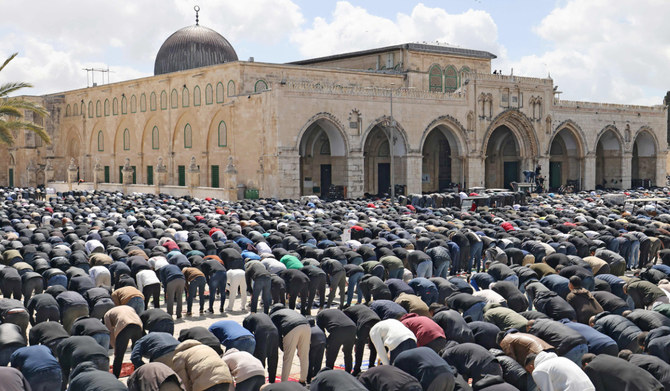
Prayer! Salah

0

“NO PRAYER IS MORE BURDENSOME TO THE HYPOCRITES THAN THE FAJR (DAWN) PRAYER AND THE `ISHA’ (NIGHT) PRAYER; AND IF THEY KNEW THEIR MERITS, THEY WOULD COME TO THEM EVEN IF THEY HAD TO CRAWL TO DO SO.” [AL-BUKHARI & MUSLIM]

VERSES FROM THE QURAN REGARDING THE DAILY PRAYERS:

In total there are around 67 verses in the Quran about Salat. Here’s a list of the common Quranic verses that are often referenced in debates as these one’s are specifically the commandments of Allah which prescribe the daily prayers as being mandatory.

Surah Ar-Rum:

17. فَسُبْحَـٰنَ ٱللَّهِ حِينَ تُمْسُونَ وَحِينَ تُصْبِحُونَ

Fa Subhaanal laahi heena tumsoona wa heena tusbihoon
So exalted is Allah when you reach the evening and when you reach the morning.

18. وَلَهُ ٱلْحَمْدُ فِى ٱلسَّمَـٰوَ‌ٰتِ وَٱلْأَرْضِ وَعَشِيًّۭا وَحِينَ تُظْهِرُونَ

Wa lahul hamdu fis samaawaati wal ardi wa ‘ashiyyanw wa heena tuzhiroon
And to Him is [due all] praise throughout the heavens and the earth. And [exalted is He] at night and when you are at noon.

Surah Hud:

114. وَأَقِمِ ٱلصَّلَوٰةَ طَرَفَىِ ٱلنَّهَارِ وَزُلَفًا مِّنَ ٱلَّيْلِ ۚ إِنَّ ٱلْحَسَنَـٰتِ يُذْهِبْنَ ٱلسَّيِّـَٔاتِ ۚ ذَ‌ٰلِكَ ذِكْرَىٰ لِلذَّ‌ٰكِرِينَ

Wa aqimis Salaata tarafayin nahaari wa zulafam minal layl; innal hasanaati yuzhibnas saiyi aat; zaalika zikraa liz zaakireen
And establish prayer at the two ends of the day and at the approach of the night. Indeed, good deeds do away with misdeeds. That is a reminder for those who remember.

Surah Baqarah:

238. حَٰفِظُوا۟ عَلَى ٱلصَّلَوَٰتِ وَٱلصَّلَوٰةِ ٱلْوُسْطَىٰ وَقُومُوا۟ لِلَّهِ قَٰنِتِينَ

Haafizoo ‘alas salawaati was Salaatil Wustaa wa qoomoo lillaahi qaaniteen
Maintain with care the [obligatory] prayers and [in particular] the middle prayer and stand before Allah, devoutly obedient.

Surah An-Nur:

58. يَـٰٓأَيُّهَا ٱلَّذِينَ ءَامَنُوا۟ لِيَسْتَـْٔذِنكُمُ ٱلَّذِينَ مَلَكَتْ أَيْمَـٰنُكُمْ وَٱلَّذِينَ لَمْ يَبْلُغُوا۟ ٱلْحُلُمَ مِنكُمْ ثَلَـٰثَ مَرَّ‌ٰتٍۢ ۚ مِّن قَبْلِ صَلَوٰةِ ٱلْفَجْرِ وَحِينَ تَضَعُونَ ثِيَابَكُم مِّنَ ٱلظَّهِيرَةِ وَمِنۢ بَعْدِ صَلَوٰةِ ٱلْعِشَآءِ ۚ ثَلَـٰثُ عَوْرَ‌ٰتٍۢ لَّكُمْ ۚ لَيْسَ عَلَيْكُمْ وَلَا عَلَيْهِمْ جُنَاحٌۢ بَعْدَهُنَّ ۚ طَوَّ‌ٰفُونَ عَلَيْكُم بَعْضُكُمْ عَلَىٰ بَعْضٍۢ ۚ كَذَ‌ٰلِكَ يُبَيِّنُ ٱللَّهُ لَكُمُ ٱلْءَايَـٰتِ ۗ وَٱللَّهُ عَلِيمٌ حَكِيمٌۭ

Yaaa aiyuhal lazeena aamanoo li yastaazinkumul lazeena malakat aimaanukum wallazeena lam yablughul huluma minkum salaasa marraat; min qabli Salaatil Fajri wa heena tada’oona siyaa bakum minaz zaheerati wa mim ba’di Salaatil Ishaaa’; salaasu ‘awraatil lakum; laisa ‘alaikum wa laa ‘alaihim junaahum ba’dahunn; tawwaafoona ‘alaikum ba’dukum ‘alaa ba’d; kazaalika yubaiyinul laahu lakumul aayaat wallaahu ‘Aleemun Hakeem
O you who have believed, let those whom your right hands possess and those who have not [yet] reached puberty among you ask permission of you [before entering] at three times: before the dawn prayer and when you put aside your clothing [for rest] at noon and after the night prayer. [These are] three times of privacy for you. There is no blame upon you nor upon them beyond these [periods], for they continually circulate among you – some of you, among others. Thus does Allah make clear to you the verses; and Allah is Knowing and Wise.

Surah Ta-Ha:

130. فَٱصْبِرْ عَلَىٰ مَا يَقُولُونَ وَسَبِّحْ بِحَمْدِ رَبِّكَ قَبْلَ طُلُوعِ ٱلشَّمْسِ وَقَبْلَ غُرُوبِهَا ۖ وَمِنْ ءَانَآئِ ٱلَّيْلِ فَسَبِّحْ وَأَطْرَافَ ٱلنَّهَارِ لَعَلَّكَ تَرْضَىٰ

Fasbir ‘alaa maa yaqooloona wa sabbih bihamdi Rabbika qabla tuloo’ish shamsi wa qabla ghuroobihaa wa min aanaaa’il laili fasabbih wa atraafan nahaari la ‘allaka tardaa
So be patient over what they say and exalt [ Allah ] with praise of your Lord before the rising of the sun and before its setting; and during periods of the night [exalt Him] and at the ends of the day, that you may be satisfied.